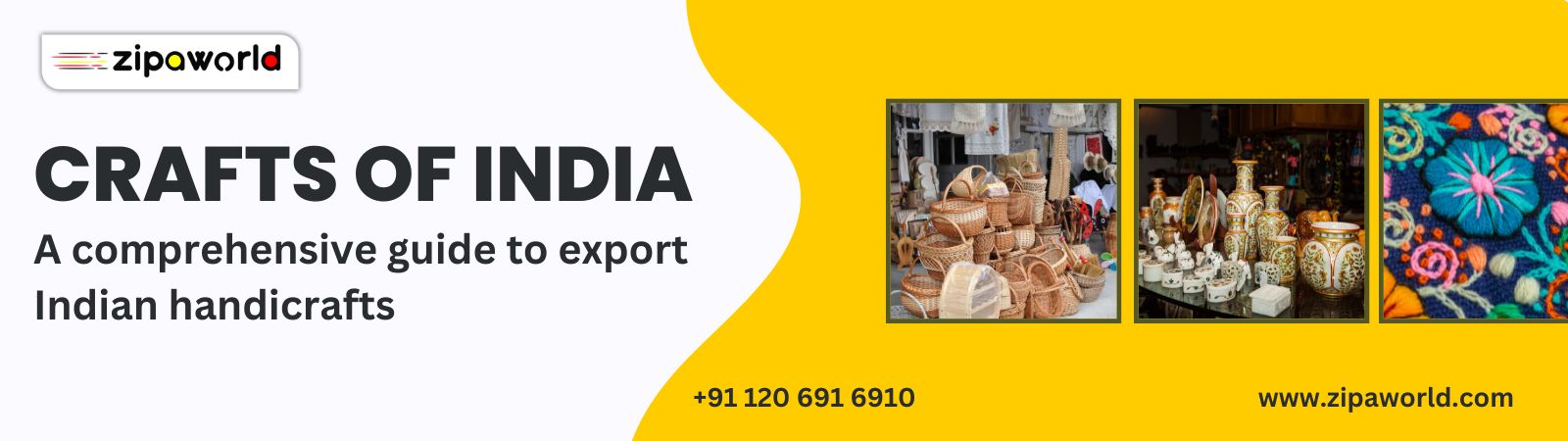
Crafts of India: A comprehensive guide to export Indian handicrafts.
India is one of the largest handicraft-exporting countries and a leader in the homemade carpet segment, both in terms of volume and value. The rural and small towns of India are where the majority of the handicraft industry lives, making their way to Indian cities and abroad through their crafts and art.
Due to increasing demand for the crafts of India in the international market, the total exports of Indian handicrafts are valued at US$ 4.35 billion for 2021-22. Major handicrafts India exports are carpets, handmade woolens, woodwares, embroidered and crocheted goods, art metalware, agarbattis, imitation jewelry, etc.
The sector is economically viable due to its low capital intensity and high export potential. Therefore, during 2020-21, the USA was the top importer of handicrafts in India, with a share of 38% of the total exports. Other major handicraft export destinations for India are the, UK, Australia, Canada, France, Germany, Italy, Japan, UAE, Netherlands, Switzerland, and many more.
Let's see what is required to export handicrafts successfully.
1. Market Research:
Due to conscious consumers, supply chains are getting more complex; therefore, before diving into the handicraft business, understand the demand for Indian handicrafts in various regions and the preferences of your potential customers, trends, competitors, and pricing strategies.
2. Legal Requirements:
Our country has to offer a total of 35,000 products made by nearly 212,000 artisans. Therefore, to avail lucrative business opportunities out of it, there are various legal requirements for exporting handicrafts. You need to first register your business, then obtain the necessary licenses and adhere to export-import regulations.
3. Supply Chain:
As a manufacturer, you must establish a robust supply chain by identifying reliable suppliers and artisans who consistently provide high-quality products. Ensure smooth logistics and shipping arrangements so that your products can be sold more effectively and efficiently.
4. Quality Assurance:
Under the National Handicraft Development Programme, the artisans are counseled to maintain quality in the export business through the implementation of strict quality control measures.
5. Digital Presence:
In today's digital age, having an online presence is crucial. Therefore, what you can do is create a website showcasing your products and leverage social media platforms to reach a global audience.
6. Networking:
For better connections and collaborations with fellow exporters and artisans, attend trade fairs, exhibitions, and networking events. This will expand your reach in the industry.
7. Training Module:
Under such a module, a curriculum with a holistic approach focusing on life and business skills, as well as training on leadership, education, and making healthy choices, should be developed. This training can help every artisan learn how to create and design demand-driven products to be sold in local and international markets, enabling them to generate income for themselves and their families.
The handicraft industry, employing more than 7 million people in India, is a great area for investment and business. Also, it has led to the growth of the rural sector and women, as out of total artisans, 56% are female. So, we hope that through the suggestions mentioned earlier, the objective of increasing the export of handicrafts by the Export Promotion Council for Handicrafts can be made possible.