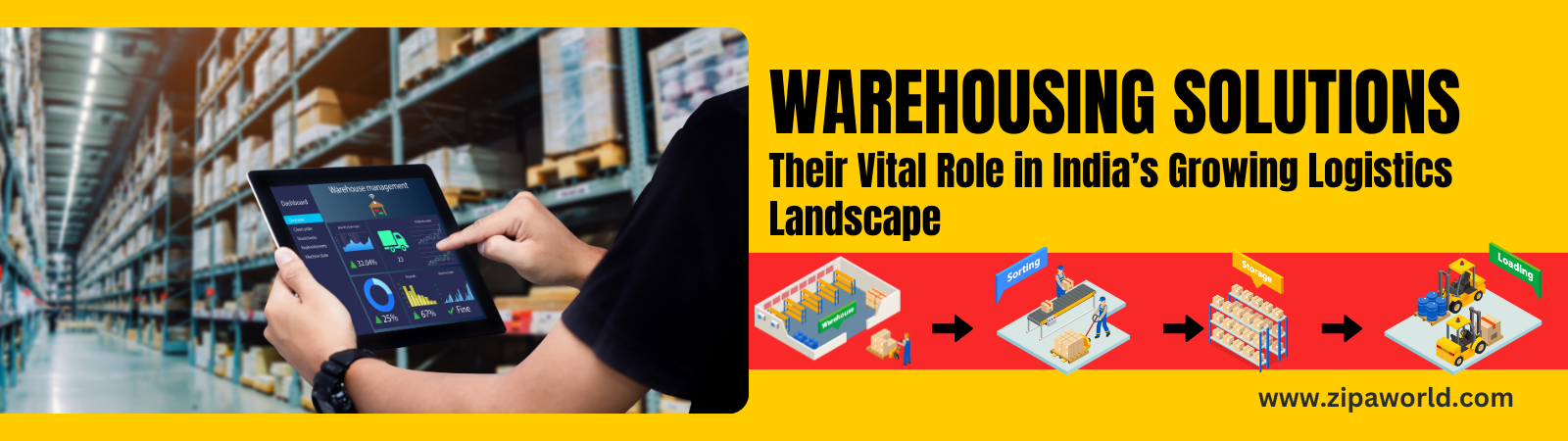
Warehousing Solutions Role in India Growing Logistics
The recent budget announcement showcases the government prioritizing the development of sustainable transportation solutions in a way that underscores its commitment to fostering growth and innovation in key sectors such as warehousing and logistics, thereby propelling India towards a more efficient logistics system.
The prevalence of online shopping and same-day deliveries has led to the invention of an unsung hero that helps facilitate the manufacturer, importer, exporter, and transportation of goods. This unsung hero is warehousing.
It's a must-have solution for any company in the business of selling physical goods. Warehousing allows them to manage their supply chains and optimize their order fulfillment processes by storing inventory in one or multiple locations for the purpose of receiving, handling, picking, packing, and shipping them to customers later.
Let's know more about the warehousing processes:
1. RECEIVING
When receiving any goods from suppliers, warehouse staff will inspect these goods side-by-side with the packing document for checking or investigating goods in case of any damages or lost goods. Once these are complete, they will proceed to place the products in the put-a-way area.
2. PUTAWAY
As soon as the products reach their storage locations within the facility from the respective receiving area, warehouse staff will need to calculate each item's space requirement and organize similar goods in groups or pallets for easy picking and packing. All this is done through equipment like wheels, rails, forklifts, pallet jacks, or automated machinery.
3. PICKING
Picking is not as simple as grabbing the item the customer ordered from the shelves and then sending it away for packaging. It's actually the process that includes retrieving, collecting, combining, and preparing the individual products that make up a customer's order.
You can do it better with warehousing solutions to save on operations costs. This process generally takes up over 60% of a warehouse's resources and accounts for 55% of its operating costs.
4. PACKING
This process involves putting the items in the appropriate packaging, weighing them, and printing labels. All this processing is ready for shipment.
5. SHIPPING
As part of shipping, coordination with the delivery service or carrier on when to pick up the packages is done. Then the packages are turned over to the respective carriers to deliver to the customer's doorstep.
6. MANAGEMENT OF RETURNS
The warehouse returns process begins even before an order is shipped, with procedures in place for when a customer decides to return an item. So, return management is the flow of products from the consumer back to the warehouse.
7. ADD-ON SERVICES FROM THE WAREHOUSE
Some warehouses also offer a Buy Online, Pick Up In-Store (BOPIS) service that allows the customer to pick up their orders in the nearest warehouse.
Warehousing is fundamental to the success of e-commerce or other businesses. Therefore, for better supply chain management and prevention of risks and disruptions, the Warehousing Development Regulation Authority promotes scientific storage and the issuance of electronic Negotiable Warehouse Receipts (e-NWR). A user-friendly warehouse management system technology that can easily be integrated into your companies software applications can help maximize profits and customers' experiences.