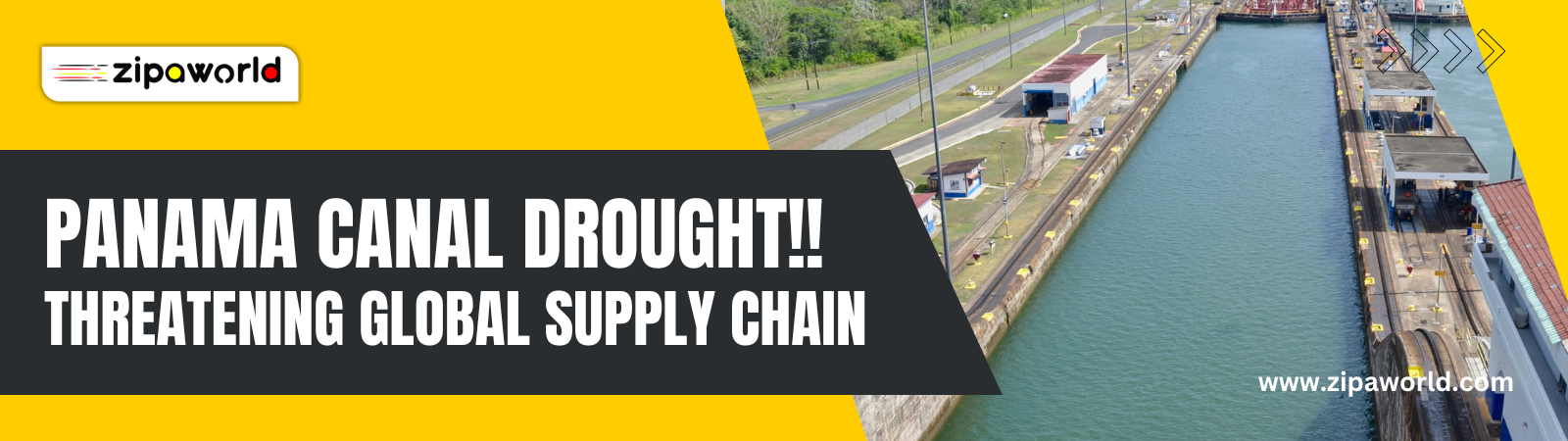
Panama Canal Drought: Supply‑Chain Risks & Responses
Climate change, geopolitics, and COVID-19 have wreaked havoc on maritime transport and logistics. One such issue is the Panama Canal drought crisis. The canal faced the driest days for the first time in 73 years, which has led to the clogging of ports, reconfiguration of routes, extending delays, and pushing up shipping costs.
Panama Canal Drought Crisis Disrupts Global Maritime Trade
Unlike the Suez Canal, which is level between two seas (the Mediterranean and the Red Sea) and therefore cannot dry up, the Panama Canal relies on an artificial lake, Lake Gatun, 26 meters above sea level. The main reason for the drought is the El Niño phenomenon (associated with warmer-than-usual water in the central and eastern tropical Pacific Ocean) of the weather system, which has led to 41% less rainfall than usual, lowering this lake to unprecedented levels.
The Canal and the country face the challenge of the upcoming dry season with a minimum water reserve that must guarantee supply for more than 50% of the population and, at the same time, maintain the operations of the inter-oceanic waterway. This current lack leads to restricted transit from 40 to 32 ships per day. This shortage of water is compelling vessels traveling from Asia to the US to opt for the Suez Canal, adding six extra days compared to the Panama Canal route.
Impact on Shipping Routes, Delays and Costs
As of 2021, the total value of the annual world shipping trade had reached more than 11 billion tons, while maritime transport accounted for 80% of global trade by volume and over 70% by value, as per the United Nations Conference on Trade and Development.
Therefore, it becomes very necessary to cope with this water shortage, and so the authorities have decided to reduce the authorized vessel draft from 50 to 44 feet (15 to 13 meters). We can simply say that fewer ships are crossing this waterway, and they're crossing with lighter loads.
Shippers can also plan through alternate routes, like Suez Canal passes through Bab-el-Mandeb Strait and the Red Sea. This canal connects Asia to Europe and is among the busiest in the world.
Panama Canal’s Measures for Sustainable Operations
Against this backdrop, the Panama Canal has also announced reservation slots in order to help ships transit as programmed. which information is provided in advance as well as in real time, so that shipping companies can plan and make the best decisions. Measures like cross-filling to ensure the safety of transit operations through the use of water reutilization basins are also taken up by the authorities.
Panama Canal has recently also appointed its first-ever chief sustainability officer for the creation of a more robust sustainability strategy in order to reduce carbon emissions and perform climate risk assessment.
All the above initiatives will help Canal specialists remain vigilant of climate variability and rainfall patterns and implement actions to ensure that operations remain safe, efficient, and competitive for the benefit of Panama and world maritime commerce.