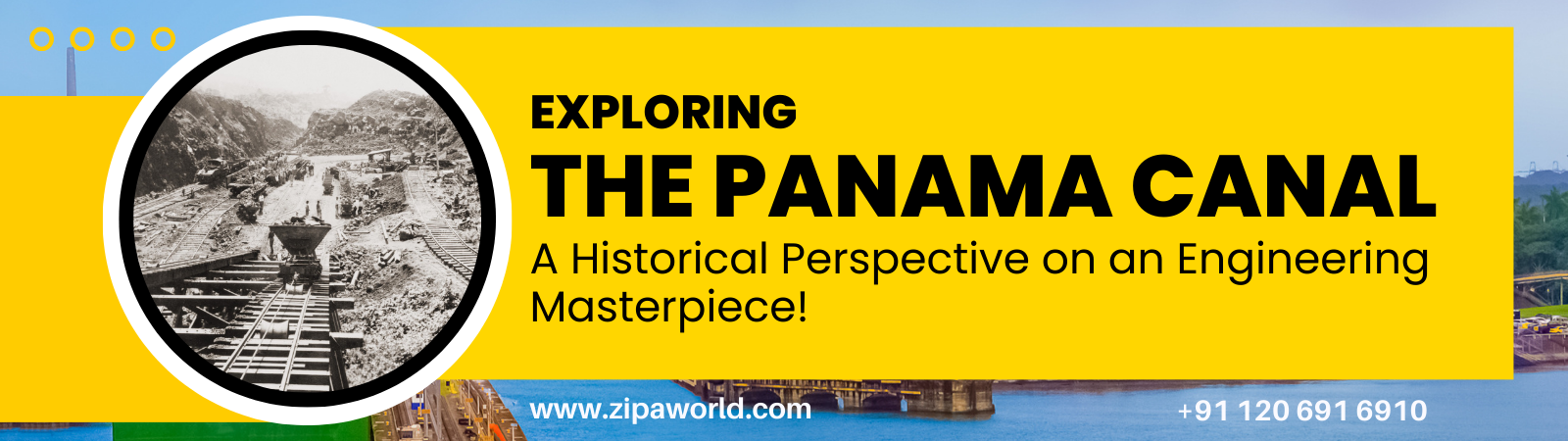
Panama Canal: History, Engineering & Global Trade Role
The Panama Canal is one of the greatest engineering achievements in modern history and a critical artery of global maritime trade. Recently, it has drawn global attention due to experiencing its driest conditions in over seven decades, raising concerns about its operational efficiency and sustainability.
Despite these challenges, the canal continues to play a vital role in connecting global trade routes, supporting thousands of vessels annually, and enabling smoother international cargo movement.
Importance of the Panama Canal in Global Trade
The Panama Canal is a strategic shipping route that connects the Atlantic and Pacific Oceans, significantly reducing travel distance for maritime vessels.
Key global trade highlights:
- Around 14,080 shipments transited in 2023
- Connects 170 countries worldwide
- Links approximately 1,920 ports globally
By eliminating the need to travel around South America, it saves time, fuel, and operational costs for global shipping industries.
Structure and Engineering of the Panama Canal
The Panama Canal is an 82-kilometer artificial waterway designed to allow ships to pass between two oceans.
Key features include:
- Lock-based system for elevation control
- Passage time of approximately 10 hours
- Designed to handle large commercial vessels
- One of the most complex engineering projects ever built
It has been recognized as one of the “Seven Wonders of the Modern World” by the American Society of Civil Engineers.
History and Development of the Panama Canal
The construction of the Panama Canal reflects decades of ambition and engineering struggle.
Key milestones include:
- 1881: Initial construction began by a French company
- Project failed due to engineering and health challenges
- 1904: United States took over construction
- 1914: Canal officially completed and operational
Since then, it has remained a cornerstone of global maritime trade.
Water Management and Lock System
A defining feature of the Panama Canal is its lock-based system, which allows ships to navigate varying sea levels.
Key components include:
- Gatun Lake as a major freshwater reservoir
- Lock chambers that raise and lower vessels
- Use of nearly 200 million liters of freshwater per transit
The system ensures smooth passage of ships while managing elevation differences between oceans.
Modern Innovations in the Panama Canal
To improve efficiency and sustainability, several technological upgrades have been introduced:
Enhanced Vessel Traffic Management System (EVTMS)
- Digitally tracks vessel movements
- Integrates maritime operational databases
- Improves traffic coordination and scheduling
Cross-Filling Water System
- Reuses water between lock chambers
- Reduces freshwater consumption significantly
- Saves water equivalent to multiple daily ship transits
These innovations aim to strengthen the canal’s long-term sustainability and operational resilience.
Conclusion
The Panama Canal remains one of the most important infrastructures in global trade, enabling faster and more efficient maritime transportation between oceans.
While climate-related challenges like drought pose operational risks, continuous technological innovation is helping improve efficiency and sustainability.
Its strategic importance ensures that it will continue to play a vital role in global logistics and supply chain networks for decades to come.