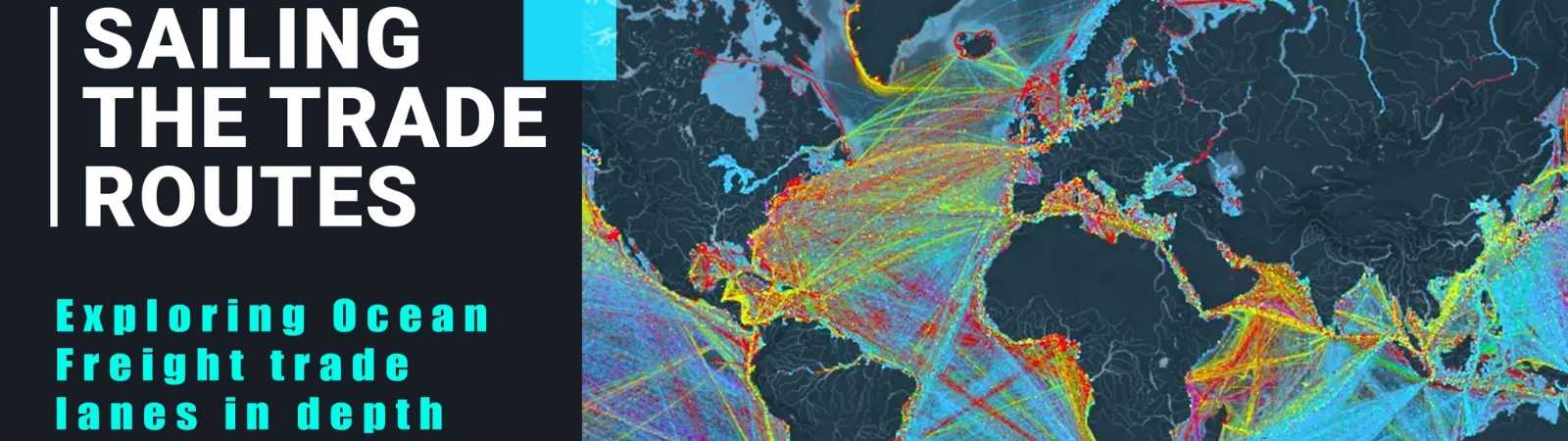
Ocean Freight Trade Lanes: The Backbone of Global Shipping and International Trade
Global trade depends heavily on efficient transportation networks, and ocean freight remains the foundation of international commerce. Every day, thousands of cargo vessels transport raw materials, finished products, machinery, consumer goods, and industrial equipment across continents. These maritime routes, commonly known as ocean freight trade lanes, connect manufacturers, suppliers, exporters, importers, and consumers worldwide.
As international trade continues to expand, understanding the world's major shipping routes has become increasingly important for businesses involved in logistics services, freight forwarding, supply chain management, and global commerce.
The Importance of Ocean Freight in Global Trade
Ocean freight is responsible for moving nearly 90% of global trade volume, making it the most widely used mode of international transportation. Its ability to handle large cargo volumes at competitive costs makes it indispensable for businesses engaged in import-export operations.
Compared to air freight services, ocean freight offers:
- Lower transportation costs
- Higher cargo carrying capacity
- Greater flexibility for bulk shipments
- Efficient movement of containerized cargo
- Sustainable transportation for long-distance trade
From consumer goods and electronics to automobiles and industrial equipment, ocean freight enables seamless international supply chains.
Understanding Major Ocean Freight Trade Lanes
Trade lanes are established shipping routes connecting major ports and economic regions across the globe. These routes facilitate the movement of goods between manufacturing centers, distribution hubs, and consumer markets.
Several major trade lanes drive international commerce and support global supply chain operations.
Transpacific Trade Lane
The Transpacific Trade Lane is one of the busiest shipping corridors in the world, connecting Asia's manufacturing hubs with North America's consumer markets.
This route plays a crucial role in transporting:
- Electronics
- Machinery
- Textiles
- Consumer goods
- Automotive components
Countries such as China, the United States, Japan, South Korea, and India contribute significantly to trade activity along this route.
Major Ports
Key ports serving the Transpacific Trade Lane include:
- Shanghai
- Shenzhen
- Hong Kong
- Vancouver
- Los Angeles
- Long Beach
- Seattle
- New York
- Savannah
Despite challenges such as port congestion, geopolitical developments, and fluctuating freight rates, this trade lane remains a vital pillar of global commerce.
Asia-Europe Trade Lane
The Asia-Europe Trade Lane connects major Asian manufacturing economies with Europe's large consumer and industrial markets.
This route supports the transportation of:
- Electronics
- Industrial machinery
- Automotive products
- Textiles
- Consumer goods
Indian ports also play an important role in facilitating trade between Asia and Europe.
Major Ports
Important ports on this route include:
- Shanghai
- Singapore
- Rotterdam
- Hamburg
- Antwerp
- Jawaharlal Nehru Port (JNPT)
- Chennai Port
- Kolkata Port
Cargo typically moves through strategic waterways such as:
- Indian Ocean
- Suez Canal
- Mediterranean Sea
The Asia-Europe corridor remains one of the most economically significant shipping routes worldwide.
North Atlantic Trade Lane
The North Atlantic Trade Lane is one of the oldest and most established maritime trade routes, connecting North America and Europe.
For centuries, this route has facilitated the exchange of:
- Industrial products
- Agricultural commodities
- Consumer goods
- Energy resources
Often referred to as the "Big Trunk Route," it continues to handle a significant share of international trade.
Major Ports
Key ports include:
North America
- New York
- Boston
- Halifax
Europe
- Liverpool
- Hamburg
- Rotterdam
This trade lane supports strong economic relationships between European and North American markets.
Intra-Asia Trade Lane
The Intra-Asia Trade Lane represents one of the fastest-growing shipping networks globally. It facilitates trade among countries within the Asia-Pacific region.
Major economies participating in this trade lane include:
- China
- India
- Japan
- South Korea
- Singapore
- Vietnam
- Malaysia
- Thailand
Cargo moving through this corridor includes:
- Raw materials
- Electronics
- Industrial equipment
- Agricultural products
- Consumer goods
Major Ports
Prominent ports include:
- Shanghai
- Busan
- Yokohama
- Singapore
- JNPT
- Visakhapatnam
- Kolkata
This route passes through critical waterways such as:
- South China Sea
- East China Sea
- Strait of Malacca
Growing regional trade agreements and manufacturing activities continue to increase the importance of the Intra-Asia trade lane.
Why Ocean Freight Remains the Preferred Shipping Choice
Despite the availability of air freight services, ocean freight remains the preferred transportation mode for businesses handling large cargo volumes.
Cost Efficiency
Ocean freight offers significantly lower transportation costs compared to air cargo services, especially for bulk shipments.
Large Cargo Capacity
Container vessels can transport thousands of containers in a single voyage, making them ideal for high-volume international trade.
Global Connectivity
Ocean freight networks connect virtually every major trading nation through an extensive network of ports and shipping routes.
Sustainability
Compared to other transportation modes, ocean freight generally produces lower carbon emissions per ton of cargo transported, supporting greener supply chain initiatives.
Container Flexibility
Businesses can choose from various container types, including:
- Standard containers
- Refrigerated containers
- Open-top containers
- Flat-rack containers
- Tank containers
This flexibility enables the transportation of diverse cargo categories.
Conclusion
Ocean freight trade lanes form the foundation of global trade and international logistics. From the Transpacific and Asia-Europe corridors to the North Atlantic and Intra-Asia routes, these maritime networks facilitate the efficient movement of goods across continents.
As supply chains become increasingly interconnected, understanding major trade lanes helps businesses make informed shipping decisions, optimize freight costs, and improve operational efficiency.
For businesses seeking reliable ocean freight services, freight forwarding solutions, and end-to-end logistics support, Zipaworld helps simplify international cargo movement with technology-driven logistics solutions and global trade expertise.