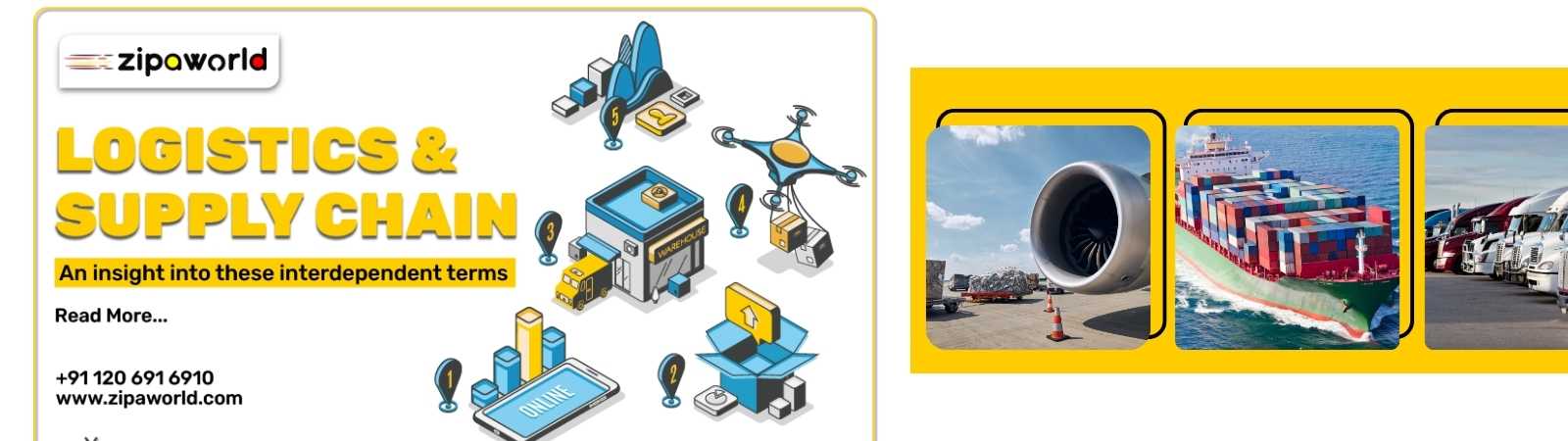
Logistics and Supply Chain: Understanding the Key Differences and Connection
In this interconnected world, where goods travel around international borders to reach consumers. There are two main concepts that stand tall as the pillars of the transportation of goods from one destination to another. Often, these terms are used interchangeably, but they hold different meanings and functions when it comes to practical implementation. In this blog, we will delve into the differences, similarities, and ways to improve the supply chain and logistics.
Understanding the Supply Chain
The term supply chain refers to the entire network of organizations, people, activities, information, and resources involved in moving a product or service from supplier to customer. It includes all the steps involved in getting a product from the raw material stage to the end user, such as procurement, manufacturing, transportation, warehousing, and distribution. At its core, the supply chain is a holistic network that encompasses everything from sourcing materials to delivering the final product. It's not just about the physical goods; it's about information flow, financial transactions, and collaboration between entities across the entire lifecycle of a product or service.
Understanding the Term Logistics
Logistics is a subset of supply chain management that focuses on the physical movement of goods and materials. It includes activities such as transportation, warehousing, inventory management, and packaging.
In other words, supply chain management is a broader concept that encompasses all the activities involved in getting a product to the customer, while logistics is a more specific discipline that focuses on the physical movement of goods.
Distinguishing the two similar but different terms
The line between supply chain and logistics might appear blurry, but a clear distinction exists. Think of the supply chain as a big building and logistics as the careful placement of bricks in that building. Supply chain management encompasses the entire spectrum of activities, from sourcing to consumption and beyond. It's about strategic decision-making, collaboration with suppliers and partners, and aligning the overall process with market demand and trends. On the other hand, logistics deals with the tactical aspects how goods move, where they're stored, and how they're packaged for safe transit.
Interdependence of the two terms
While supply chain and logistics have distinct roles, they are profoundly interdependent. A well-optimized supply chain strategy takes logistics considerations into account to ensure each operational aspect complements the others. Efficient logistics are crucial for achieving the supply chain's overarching goals: meeting customer demands promptly, minimizing lead times, and keeping costs in check.
Consider a scenario where a retail giant plans to launch a new product. The supply chain team forecasts demand, collaborates with suppliers for raw materials, and strategizes marketing campaigns. Simultaneously, the logistics team ensures that manufacturing inputs are timely, production lines are efficient, and distribution networks are primed to deliver the new product swiftly to retail outlets.
How businesses can improve their supply chain and logistics network
- Using technology: Technology can be used to improve visibility into the supply chain, optimize transportation routes, and manage inventory levels.
- Reducing waste: Businesses can reduce waste by optimizing their packaging, improving their inventory management, and reducing their returns.
- Being flexible: Businesses need to be flexible in order to adapt to changes in the market. This includes being able to quickly adjust their supply chain and logistics operations to meet changing demand.
In conclusion, supply chain and logistics, while distinct, form an inseparable partnership that helps modern businesses grow. As businesses continue to navigate the complexities of a global marketplace, understanding the difference between the two will remain pivotal to meeting supply and demand in the global market.