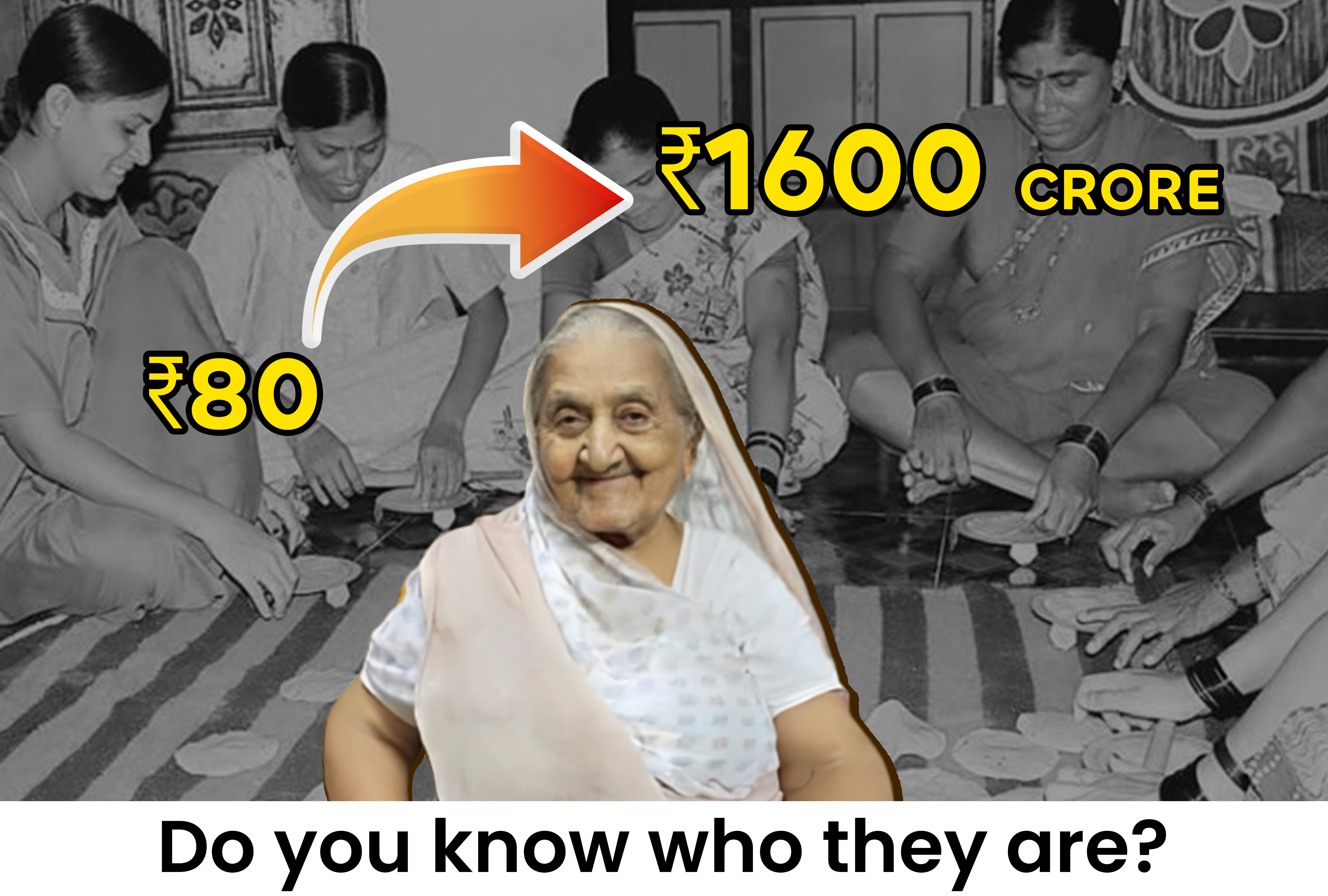
How 7 Homemakers made 1600 crore Empire!!
The world today is no stranger to the taste and name of Lijjat Papad. What started as a small-scale venture in 1959 has evolved into a multi-million-dollar cooperative, empowering thousands of women across India. It is a tale of humble beginnings, perseverance, and the power of unity among seven ordinary homemakers that has unfolded into an extraordinary narrative of success.
In the late 1950s, seven Gujarati homemakers from Bombay, who wished to financially support their families, pooled their culinary skills to create an enterprise that would leave a mark in the history of Indian entrepreneurship.
How Lijjat Papad Started with Seven Homemakers
Aided by an 80-rupee loan from a member of the Servants of India Society, Chhaganlal Karamsi Parekh, these homemakers purchased a loss-making papad production unit. In this setup, they invested in rudimentary equipment necessary for manufacturing papads, thereby laying the foundation for a business empire that would be run by women, for women.
From a Small Venture to a Growing Cooperative
The initiative scaled progressively. They started as a cooperative, initially allowing younger girls to join, and eventually increasing the entry age to eighteen. Within three months, the collective swelled to 25 women, with all of them engaged in papad making. They utilized their earnings to procure business essentials like utensils, cupboards, and stoves.
The first year saw sales reach Rs. 6,196, a modest start but an encouraging one. Word of this initiative spread, and more women from the neighborhood joined the collective. By the end of the second year, membership soared to 100-150 women and crossed the 300 mark by the third year.
How Lijjat Papad Became a Nationwide Business
In 1962, the business took a significant step and branded its product as 'Lijjat', Gujarati for 'tasty.' The formal name being Shri Mahila Griha Udyog Lijjat Papad. In just three years since its rebranding, papad sales escalated to an annual Rs. 182,000.
Fast forward to 2002, Lijjat was generating revenues of a whopping Rs. 300 billion, with exports amounting to Rs. 10 billion. The cooperative was providing employment to 42,000 members, spanning 62 branches across the nation.
Today, Lijjat Papad stands as a symbol of women's empowerment and entrepreneurial success. The story of these seven homemakers serves as a source of inspiration for aspiring entrepreneurs across the nation. It is a testimony to the fact that with unity, perseverance, and a clear vision, success is achievable, regardless of the scale at which one starts. It underscores the power of simple ideas and how they can be transformed into groundbreaking business models, creating ripples of change in society. The legacy of Lijjat Papad is a shining beacon for all who dream of creating their own successful enterprise.