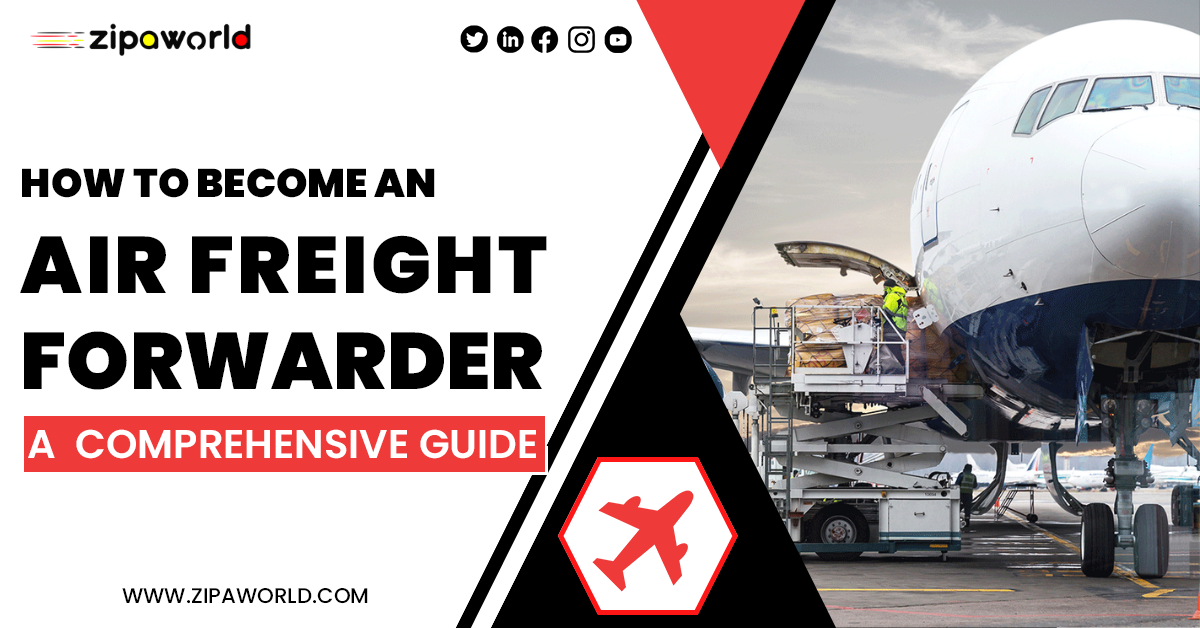
Air Freight Forwarder: A Comprehensive Guide
In today's fast-paced world, the logistics industry plays a pivotal role in connecting businesses and consumers across continents. One of the key players in the logistics industry are the freight forwarding agents who do business across multiple modes of transportation for domestic and international trade. Air freight forwarders play a pivotal role in global trade as they are responsible for providing goods at a fast pace. In fact, the majority of the high-value, time-sensitive, and precious consignments move via air freight, and here comes the role of the air freight forwarder in order to handle and deliver the customized solutions as per the client's requirements.
If you are considering working in this dynamic industry, this article will surely give you insight into the roles and functions of an air freight forwarder.
What is an Air Freight Forwarder?
An expert in logistics who plans shipments for people or businesses is known as an air freight forwarder. They are the experts who are familiar with the do's and don'ts of airline carriage conditions. They provide you with detailed solutions on how the goods will be transported on a passenger aircraft or cargo-only aircraft, regardless of the size or dimensions of the consignment, because they are aware of the complexity of the goods. In order to transport the consignment as efficiently and affordably as possible, they act as the middlemen between the buyer and the seller.
- Step 1: Understand the Industry
- Before you dive in, it's crucial to understand the industry and the role of an air freight forwarder. Familiarize yourself with supply chain logistics, international trade, customs regulations, and the specific challenges and opportunities of air freight.
- Step 2: Gain Relevant Education and Experience
- While there's no specific requirement to become an air freight forwarder, a degree in logistics, supply chain management, or international trade adds additional weight to the person, as he or she will be well-versed in the supply chain process and know what the role of an air freight forwarder is and how it plays an important role in the whole process.
- Step 3: Learn the Regulations
- Air freight forwarders must comply with various regulations, depending on the type of commodities carried across the countries, as many commodities have certain parameters in terms of acceptance for carriage by the airlines. They must ensure compliance in relation to safety, security, and customs. These regulations can vary by country, so it's essential to understand them in the regions where you plan to operate.
- Step 4: Build a Network
- To be a successful air freight forwarder, you need a strong network of agents and offices across continents who will work on your behalf and carry out the activities required for air freight. A robust network will enable the successful handling of the consignments. It is always beneficial to attend industry events, make contacts, join professional organizations, and leverage social media to connect with peers and potential partners.
- Step 5: Obtain Necessary Licenses and Certifications
- To be an international air freight forwarder, you must get the IATA (International Air Transport Association) certification, as without this, you will not be able to execute the airway bill. The same is required for the air carriage of goods. To handle certain commodities, like dangerous goods, you will require a dangerous goods certified person to handle the consignment.
- Step 6: Develop Key Skills
- There are various skills required, but here are some key skills for air freight forwarders: negotiation, problem-solving, and communication. Additionally, being detail-oriented and having the ability to handle stress are crucial, as you'll often need to manage complex logistics under tight deadlines.
- Step 7: Stay Updated
- The logistics industry is constantly evolving, with new technologies and regulations. Stay updated by attending industry conferences, participating in training programs, and following industry news.
Conclusion
Becoming an air freight forwarder can be a rewarding career as this belongs to one of the fastest-growing sectors, which is required in every business. Those interested in logistics and international trade must cater to client requirements and understand geopolitical situations to deliver the goods at the desired time and location. While the path can be challenging, with the right preparation and commitment, you can succeed in this dynamic field.
Leveraging Technology with Zipaworld
In today's digital age, leveraging technology can significantly streamline your journey as an air freight forwarder. In today's world, everything is available at your fingertips, so it is essential to have an organization that is technically and technologically advanced to provide multimodal logistics solutions.
Zipaworld, a digital multimodal logistics platform, will add immense value to your supply chain activities. It integrates advanced technology into the logistics process, making it more efficient and transparent. With features like instant quotes, smart suggestions, document managers, real-time tracking, and a user-friendly interface, it simplifies the complexities of freight forwarding. Whether you're managing air, sea, or land freight, Zipaworld provides a one-stop solution, enabling you to focus more on strategic tasks and less on operational challenges. By embracing such digital solutions, you can stay ahead in the competitive field of freight forwarding.
Visit- https://zipaworld.com/