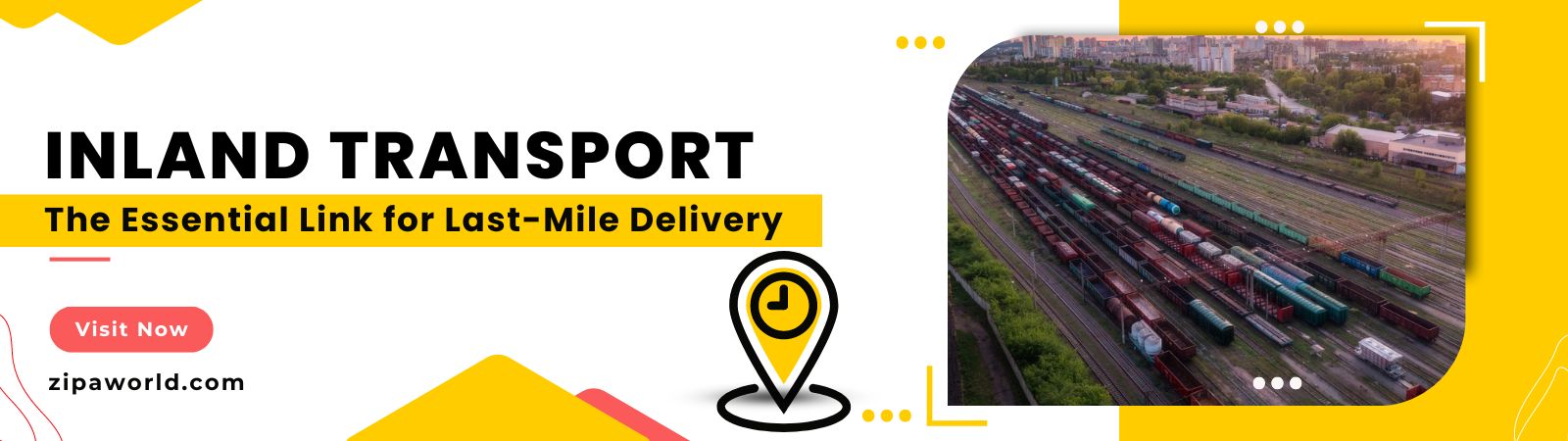
Inland Transport: The Essential Link for Last-Mile Delivery
Inland transport refers to the movement of goods or passengers within a country through land-based transportation networks. It includes various modes of transportation such as road transport, rail transport, and inland waterways. As a critical component of logistics services and supply chain management, inland transport serves as the backbone of domestic trade and cargo movement.
An efficient inland transport service facilitates the seamless flow of goods between manufacturing facilities, warehouses, distribution centers, retail outlets, ports, airports, and end customers. It plays a crucial role in ensuring timely deliveries, optimizing transportation costs, and maintaining supply chain efficiency.
Let's discuss the types, advantages, and challenges of inland transport in detail.
Modes of Inland Transportation
1. Road Transport
Road transport is the most widely used mode of inland transport due to its flexibility, accessibility, and extensive reach. Trucks, trailers, and delivery vans are commonly used for transporting goods directly to their destinations.
One of the key advantages of road transportation is its ability to support both short-haul and long-haul shipments. It offers door-to-door delivery capabilities, making it an essential component of modern logistics services and last-mile delivery operations. Businesses across industries rely on road transport for efficient cargo movement and timely order fulfillment.
2. Rail Transport
Rail transport is commonly used for moving large volumes of cargo over long distances. It is a cost-effective option for bulk shipments such as raw materials, industrial goods, agricultural products, and containerized freight.
Railways also offer strong connectivity across regions, enabling businesses to transport both large cargo consignments and smaller parcels efficiently. Due to its lower transportation costs and reduced environmental impact, rail transport continues to be an important part of inland transport networks.
3. Inland Waterways
Inland waterways involve the transportation of goods through rivers, canals, and lakes using barges and boats. This mode is particularly suitable for heavy cargo, oversized shipments, and bulk commodities.
Inland water transport offers several benefits, including lower fuel consumption, reduced traffic congestion, and improved sustainability. As governments continue investing in waterway infrastructure, inland waterways are becoming an increasingly important transportation option within domestic supply chains.
Advantages of Inland Transport
1. Cost-Effective Transportation
Inland transport, particularly road transport and rail transport, generally operates at a lower cost compared to air freight services and international ocean freight shipping. This makes it an economical solution for domestic cargo transportation and distribution.
Businesses can optimize logistics expenses while maintaining efficient delivery schedules, making inland transport one of the most preferred options for domestic shipping operations.
2. Flexible and Accessible
One of the greatest strengths of inland transport is its flexibility. Businesses can choose between various transportation modes, including trucks, trains, and inland waterways, depending on shipment requirements, delivery timelines, and cargo volume.
Road transportation networks provide extensive connectivity between cities, towns, industrial zones, and remote locations. This accessibility allows businesses to transport goods to areas that may not have direct access to airports, seaports, or other transportation hubs.
3. Faster Deliveries and Improved Connectivity
Inland transport enables businesses to move goods quickly across domestic markets through direct transportation routes. Well-established road transportation networks facilitate efficient cargo movement and support faster order fulfillment.
The growing demand for express delivery services has further increased the importance of inland transport. Businesses increasingly rely on efficient inland transport services to provide quick deliveries, enhance customer satisfaction, and improve supply chain responsiveness.
4. Supporting International Trade and Last-Mile Delivery
Whether goods are transported through air freight services or ocean freight shipping, inland transport plays a crucial role in connecting ports and airports with their final destinations.
For imports, inland transport handles the movement of cargo from airports and seaports to warehouses, distribution centers, and customer locations. For exports, it ensures that goods reach airports and ports on time for international shipment.
As a result, inland transport serves as a vital link between domestic logistics operations and global trade networks.
Challenges of Inland Transport
1. Road Transport Vulnerabilities
Road transportation can be affected by infrastructure limitations, traffic congestion, vehicle breakdowns, and weather-related disruptions. These challenges can result in shipment delays, increased operational costs, and higher maintenance expenses.
In certain cases, poor road conditions may also increase the risk of cargo damage and affect delivery schedules.
2. Geographical Limitations
Certain regions, such as mountainous terrains, remote rural areas, and locations with limited transportation infrastructure, can present logistical challenges.
Inadequate inland transport connectivity in these areas may lead to longer transit times and increased transportation costs. However, road transport continues to play a critical role in reaching such locations where alternative transportation options may be limited.
3. Time Sensitivity for Long-Distance Shipments
While inland transport is highly effective for domestic cargo movement, long-distance shipments may require more transit time compared to air freight services.
Factors such as traffic congestion, weather conditions, regulatory checkpoints, and infrastructure constraints can affect delivery timelines. For urgent and time-sensitive shipments, businesses often combine inland transport with air freight solutions to achieve faster delivery outcomes.
Conclusion
Inland transport remains one of the most important pillars of modern logistics services and supply chain management. It facilitates efficient cargo movement, supports last-mile delivery, connects businesses to domestic and international markets, and enables seamless transportation across various industries.
Although inland transport faces challenges such as infrastructure limitations, geographical constraints, and transit delays, its advantages in terms of flexibility, accessibility, cost-effectiveness, and connectivity make it indispensable for businesses.
By selecting the right inland transport service and transportation mode based on operational requirements, businesses can optimize supply chain performance, improve delivery efficiency, and enhance customer satisfaction.
Move Your Cargo Efficiently with Zipaworld
Looking for reliable inland transport solutions? Zipaworld offers efficient road transport services, end-to-end logistics services, and seamless cargo movement solutions to help businesses optimize their supply chains.
Book your cargo with Zipaworld and experience reliable inland transport services designed to support faster deliveries and smarter logistics operations.