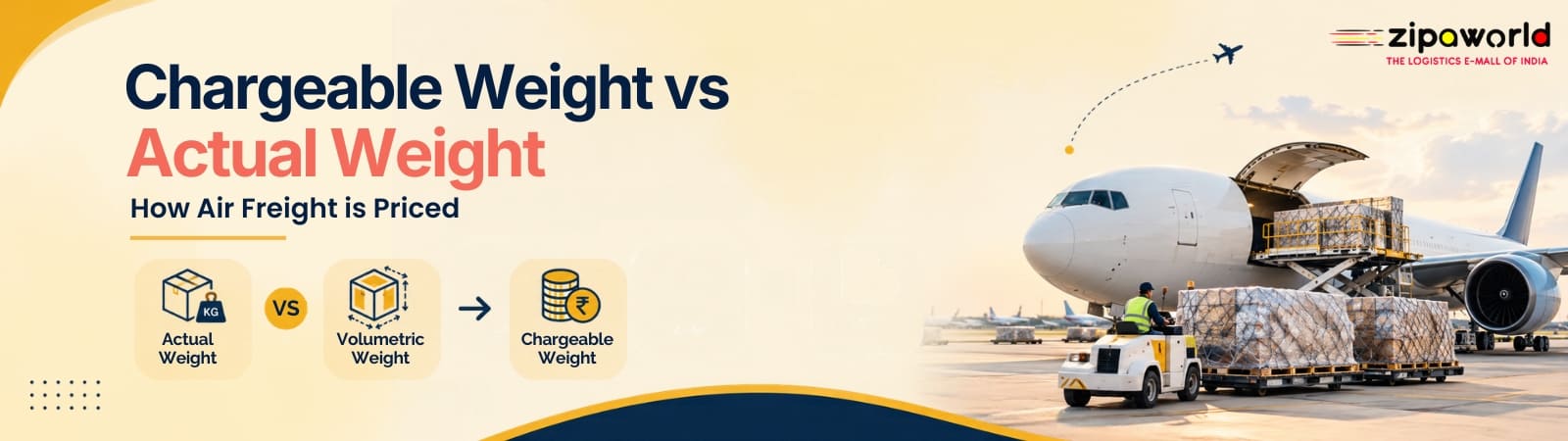
Chargeable Weight vs Actual Weight in Air Freight: Key Differences
When shipping goods by air, many businesses are surprised to see that freight charges are higher than expected. The reason is simple: airlines do not always calculate costs based only on the physical weight of your shipment. They use chargeable weight, which considers both the actual weight and the space your cargo occupies.
Understanding the difference between chargeable weight vs actual weight can help businesses plan shipments better, reduce unexpected costs, and manage international air freight more efficiently. In this guide, we explain how air freight pricing works, how volumetric weight is calculated, and how tools like airway tracking help businesses stay updated throughout the shipping journey.
What Is Actual Weight in Air Freight?
Actual weight, also known as gross weight, is the physical weight of your shipment measured using a weighing scale.
For example, if you ship a box containing electronic parts and the total weight of the package is 50 kg, your actual weight is 50 kg.
Actual weight includes:
- Product weight
- Packaging materials
- Cartons, pallets, or containers used for transportation
Airlines use actual weight as one factor when calculating freight charges. However, it is not always the final weight used for billing.
This is where chargeable weight becomes important.
What Is Chargeable Weight?
Chargeable weight is the weight used by airlines and freight companies to calculate the shipping cost. It is determined by comparing two values:
- Actual weight
- Volumetric weight (also called dimensional weight)
The higher value between these two becomes the chargeable weight.
This system exists because aircraft space is limited. A lightweight shipment that takes up a large amount of space can reduce the capacity available for other cargo. Airlines therefore charge based on the space occupied, not only the physical weight.
Chargeable Weight vs Actual Weight: Understanding the Difference
The main difference between actual weight and chargeable weight is that actual weight measures how heavy your shipment is, while chargeable weight considers how much space it occupies.
For example:
Imagine you are shipping a large box filled with lightweight products.
- Actual weight: 40 kg
- Volumetric weight: 80 kg
Since volumetric weight is higher, the airline will charge you based on 80 kg.
On the other hand:
- Actual weight: 200 kg
- Volumetric weight: 150 kg
In this case, the chargeable weight will be 200 kg.
This calculation ensures fair pricing based on aircraft capacity usage.
How Is Volumetric Weight Calculated?
Volumetric weight is calculated using the dimensions of your shipment.
The general formula used in air freight is: Length × Width × Height ÷ Volumetric Factor = Volumetric Weight
The volumetric factor may vary depending on airline rules, but a common industry standard is 6000 when measurements are taken in centimeters.
Example:
A package measures:
- Length: 100 cm
- Width: 80 cm
- Height: 60 cm
Calculation:
100 × 80 × 60 ÷ 6000 = 80 kg volumetric weight
If the actual weight is only 50 kg, the shipment will be charged at 80 kg.
Why Businesses Need to Understand Chargeable Weight
Knowing how air freight pricing works helps businesses make better shipping decisions.
Some benefits include:
Better Cost Planning
Businesses can estimate shipping costs more accurately before booking cargo transportation.
Improved Packaging Decisions
Reducing unnecessary packaging space can lower volumetric weight and decrease freight expenses.
Smarter Logistics Management
Companies can compare shipping options and choose the most cost-effective solutions.
For businesses handling frequent international shipments, understanding weight calculations is essential for controlling logistics costs.
Role of Airway Bills in Air Freight Shipments
An airway bill is one of the most important documents used in air cargo transportation. It acts as a shipment receipt and contains essential details about the cargo, sender, receiver, and transportation route.
Businesses often use an airway bill for tracking to monitor shipment progress from pickup to final delivery.
An airway bill usually includes:
- Shipper and consignee information
- Flight details
- Cargo description
- Shipment weight
- Tracking reference number
Unlike ocean freight documents, an airway bill is issued for air cargo movement and helps maintain shipment visibility.
How Airway Tracking Helps Businesses
Modern logistics depends heavily on shipment visibility. With airway tracking, businesses can check the current status of their cargo without contacting multiple parties.
Using an airway bill number, companies can monitor:
- Shipment acceptance status
- Airport processing updates
- Flight movement details
- Delivery progress
Whether you use air bill tracking or search through an airway bill no tracking system, having real-time shipment information helps businesses manage customer expectations and supply chain planning.
Businesses can simply enter their track airway bill no details through available tracking platforms to receive shipment updates.
Tips to Reduce Air Freight Costs
Businesses can control air freight expenses by following a few practical steps:
Optimize Packaging
Use packaging that protects products without adding unnecessary volume.
Consolidate Shipments
Combining smaller shipments into one larger shipment can sometimes reduce overall freight costs.
Provide Accurate Shipment Details
Incorrect dimensions or weights can lead to billing adjustments and delays.
Choose the Right Logistics Partner
A digital logistics provider can help compare routes, manage documentation, and improve shipment visibility.
How Zipaworld Simplifies International Air Freight Management
Managing air shipments requires accuracy, transparency, and reliable technology. Zipaworld helps businesses simplify their logistics operations through digital solutions designed for modern supply chains.
From shipment management to tracking support, businesses can improve visibility and make informed decisions throughout the transportation process.
With better access to shipment updates, including airway tracking, companies can reduce uncertainty and improve customer communication.
Conclusion: Understand Your Freight Weight Before You Ship
Air freight pricing is not based only on how heavy your shipment is. The difference between actual weight and chargeable weight plays a major role in determining transportation costs.
By understanding volumetric calculations, managing packaging efficiently, and using tools like airway tracking, businesses can avoid unexpected charges and improve shipping efficiency.
Whether you are managing regular exports or occasional international shipments, choosing the right logistics partner can make air freight simpler and more predictable.
Partner with Zipaworld to manage your international air freight needs with better visibility, smarter solutions, and reliable digital logistics support.