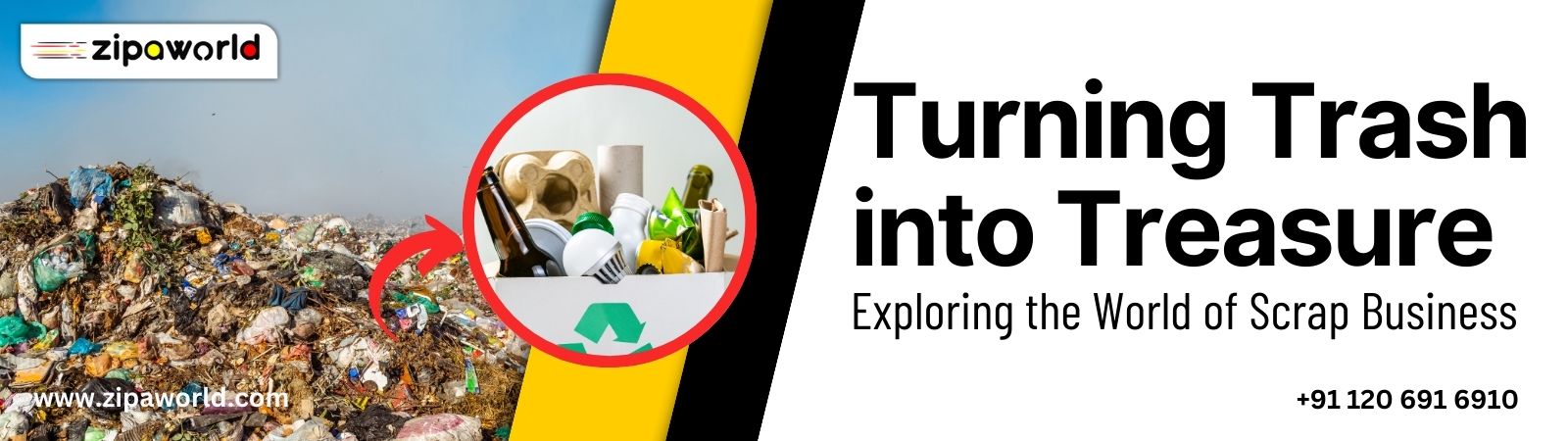
Turning Trash into Treasure: The Scrap Business
In this journey towards a sustainable future, every individual has a role to play. Whether through conscientious consumption, responsible disposal, or active participation in recycling initiatives, each of us holds the power to shape a world where waste is not merely discarded but transformed into a valuable resource.
Managing scrap materials, whether they are discarded or rejected during production, is critical for both environmental sustainability and a company's financial health. Henceforth, implementing effective measures to handle scrap becomes a primary imperative for all businesses.
Scrap business: Global Level
The increasing speed of industrialization urges a global demand for recycled scrap. With over 5.25 million metric tons of scrap imports recorded by June 2022, it's evident that the recycling trend has become imperative. The market for recycled scrap encompasses a wide array of materials, including metals, plastics, and even electronic waste. This kind of shift towards recycling has not only mitigated the accumulation of waste but has also ushered in financial benefits and resource conservation on a monumental scale.
At this forefront, the scrap metal recycling process involves a meticulous journey from collection to processing and eventually distribution. Countries worldwide are recognizing scrap as a strategic raw material and putting it into recycling, refurbishing, and reusing for domestic as well as global trade. For instance, there are many countries like the US, UK, and China that export or import scrap. Ukraine stood as the largest exporter (ferrous scrap) in 2023, while Turkey emerged as the top importer, importing a staggering 9.6 million metric tons.
Scrap business in India:
In the vibrant landscape of India's industrial sector, the scrap business is emerging as a pivotal yet largely unexplored frontier. Accounting for USD 11 billion, or 2.2% of the global industry, India's scrap sector holds immense potential for growth and development. The industry's contributions to the Indian economy are multifaceted, ranging from job creation and resource conservation to promoting a circular economy and reducing carbon emissions. The typical procedure for managing scrap involves processes such as trimming, molding, and turning in manufacturing facilities.
With over 3,500 organized and 4,000 unorganized recycling units employing over 600,000 individuals directly, India's plastic scrap industry is a vital cog in the economic machinery. These units play a crucial role in processing various scrap materials, from metals to plastics, thereby reducing the need for virgin resources and minimizing environmental pollution.
Challenges and Advantages of Scrap Processing:
While the scrap processing industry offers numerous benefits, it also faces several challenges. These include issues related to quality consistency, regulatory compliance, environmental impact, and infrastructure limitations. Despite these obstacles, the industry continues to thrive due to factors such as increasing demand, heightened environmental awareness, infrastructure investments, and technological advancements.
Additionally, creative approaches for handling scrap materials have emerged. For instance:
- Sustainable Sculptures: Artists transform scrap metal into remarkable sculptures. These pieces not only repurpose waste but also serve as powerful statements about sustainability.
- Recycled Packaging: Scrap metal finds a new purpose in the packaging industry. It is commonly used for canned food items like soups, soft drinks, and pre-packaged baked goods.
- Repurposing Old Devices: Instead of discarding old electronic devices, they can be repurposed into new creations, such as tinkering toys or innovative gadgets.
- Innovative Construction Materials:
- Eco-Bricks: These bricks are made from recycled plastic and are used in construction projects. Notably, a school in South Africa was constructed using eco-bricks.
- Plastic Roads: Some regions create roads using recycled plastic, reducing waste and enhancing road durability.
- 3D-Printed Street Furniture: Household plastic waste is transformed into functional street furniture through 3D printing technology.
These examples demonstrate how creativity and resourcefulness can turn scrap materials into valuable assets while promoting sustainability.
Conclusion:
As we navigate the complexities of the modern era, scrap emerges as a ray of sustainability and economic viability. As we stand at the tip of a rapidly growing industry, the future of scrap holds immense promise. By embracing stricter quality control, ensuring regulatory stability, investing in eco-friendly practices, and leveraging technological innovations, we can unlock the full potential of the scrap industry.
Furthermore, for those intrigued by the intricacies of waste management and curious about the monumental challenges posed by discarded materials, we invite you to explore our video on the Tyre Graveyard. This visual journey provides insights into how waste tires are stored and the environmental impact of such massive accumulations. Watch the video to delve deeper into this fascinating aspect of sustainable practices. Video link: https://www.youtube.com/watch?v=WmkkKJw2a_Y