Air Freight vs Ocean Freight - A Comprehensive Guide
In international trade, choosing the right mode of transportation is crucial for controlling costs, meeting delivery timelines, and ensuring cargo safety. Businesses often compare air freight and ocean freight, as each offers unique advantages depending on the shipment requirements.
Understanding the differences between these two transportation modes can help importers and exporters make informed logistics decisions and optimize their supply chains.
What is Air Freight?
Air freight, also known as air cargo, refers to the transportation of goods by aircraft. It is the fastest shipping method available and is widely used for time-sensitive, high-value, or perishable shipments.
Key Advantages of Air Freight
- Fast Transit Times: Ideal for urgent shipments that require quick delivery.
- Reliable Schedules: Airlines operate on fixed schedules, ensuring greater predictability.
- Enhanced Security: Airports follow strict security protocols, reducing the risk of theft or damage.
- Global Connectivity: Provides access to international markets with minimal transit time.
Limitations of Air Freight
- Higher transportation costs compared to sea freight.
- Weight and size restrictions for cargo.
- Limited suitability for bulky or oversized shipments.
- Restrictions on certain hazardous materials and regulated goods.
When shipping goods internationally, businesses often take critical decisions in choosing the most suitable mode of transportation for their cargo. These decisions typically involve comparing air freight and ocean freight, as both have their own set of limitations and benefits. Making the right decision is essential for optimizing costs, meeting delivery deadlines, and ensuring the safe arrival of goods. In this blog, we will explore the advantages and disadvantages of air freight and ocean freight, helping you determine the best option for your shipping needs.
What is Ocean Freight?
Ocean freight involves transporting goods via cargo vessels across seas and oceans. It is the most economical option for moving large quantities of goods over long distances.
Key Advantages of Ocean Freight
- Cost-Effective: Lower shipping costs for large and heavy shipments.
- High Capacity: Suitable for bulk cargo, oversized equipment, and high-volume goods.
- Versatile Shipping Options: Supports Full Container Load (FCL), Less than Container Load (LCL), and specialized cargo solutions.
- Environmentally Efficient: Lower carbon emissions per ton of cargo compared to air transport.
Limitations of Ocean Freight
- Longer transit times.
- Potential delays due to port congestion, customs procedures, or weather conditions.
- Less flexibility for urgent deliveries.
- More complex logistics planning.
Understanding Air Freight & Ocean Freight
Air freight or air cargo simply means transporting goods using an air carrier. It is the fastest mode of transportation which makes it the preferred choice for time-sensitive shipments.
Ocean freight refers to transporting goods via ocean/sea using ships. It is the most cost-effective mode for transporting heavy and voluminous goods.
Benefits & Limitations of These Modes of Transport
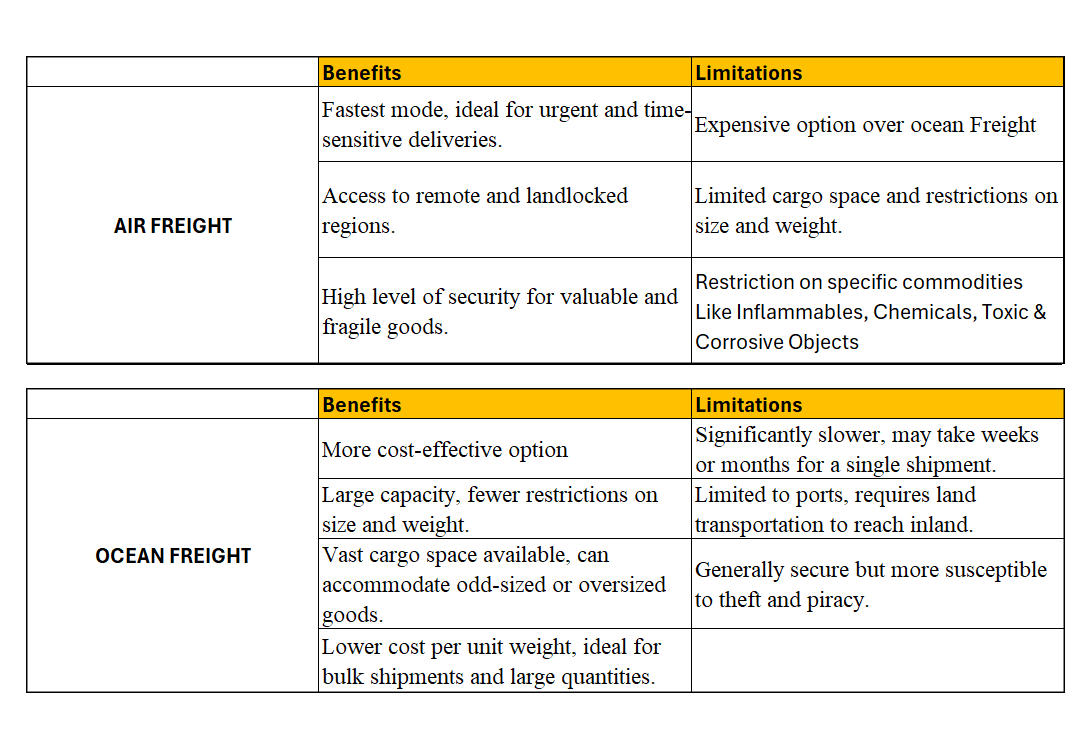
Factors to consider when choosing between Air Freight and Ocean Freight
1. Cost: For businesses, cost of shipment is a prime factor. It is generally thought that ocean freight is cheaper when it comes to the transportation of large volumes of goods over long distances, making it a preferred choice for bulk shipments. This cost-effectiveness is due to the larger capacity of ships. Whereas air freight is faster and offers greater security, but it is a costly affair. So, businesses must weigh the urgency and value of their goods against the higher costs of air transport.
2. Time: While cost is a primary consideration, time is also an important factor. Ocean freight is highly unpredictable with no predetermined date of delivery. Along with the long journey time, port congestion, bad weather conditions and customs procedures add up to the delays.
Air freight offers fastest delivery options, often with the same day delivery. It also promises predictability with fixed departure and arrival times. There is very little chance of unexpected delays.
So, if time is of essence, air freight is a better option.
3. Type of Goods: While ocean freight can accommodate bulkiest goods and odd sized goods, air freight can be restrictive.
Also, air freight comes with a long list of prohibitions like- all objects containing gases (bulbs), inflammables (perfumes and sprays), toxic and corrosive objects (batteries), all materials that come with a dangerous warning, objects that are a threat to public health, and chemicals used for medicinal purposes. This makes ocean freight a more preferred choice.
4. Safety: Though cost and time are important aspects, safety of cargo is equally important for the businesses or it can lead to supply chain mismanagement. Manual handling of cargo is a major factor affecting the safety of cargo. Air freight and ocean freight both involve manual handling of cargo which is susceptible to errors and man-handling. Restricted items should be avoided as they can cause accidents. Also packaging of the cargo should be done with most care to avoid damages in transit.
Whether you choose Air or Ocean freight depends totally on your specific needs. To assist with the decision, Zipaworld has come up with an innovative feature called Smart Suggestion. This tool analyzes your requirements and recommends the best option, whether you prioritize speed or cost-effectiveness. It ensures you save both time and money while meeting your shipping needs.
Also read how an air freight forwarder calculates Air Freight
Conclusion
Both air freight and ocean freight play critical roles in global trade. Understanding their strengths and limitations allows businesses to make informed logistics decisions that align with operational goals and customer expectations.
By evaluating factors such as cost, transit time, cargo type, and safety requirements, businesses can select the shipping solution that delivers maximum value and efficiency for their supply chain.